 guide@carshipping.online
 Short answer: To ship a car cross-country, research and book a licensed and insured auto transport company. Prepare your car by cleaning it, removing personal items, and documenting its condition. Choose between open and enclosed transport based on budget and vehicle value. On pickup and delivery, inspect the car thoroughly before signing off.
Key takeaways
- Always choose a licensed and insured auto transport company.
- Choose between open and enclosed transport based on budget and vehicle value.
- Remove all personal items and disable toll passes before shipping.
- Document the car’s condition before pickup to file claims effectively if needed.
- Get multiple quotes and compare services, not just prices.
What you will find here
Moving across the country is a major life event. But the thought of driving your car 2,000 miles—or trusting it to a stranger behind the wheel—can turn the whole thing into a headache. Fortunately, professional car shipping is a well-oiled industry. With a little know-how, you can get your vehicle from point A to point B without drama.
In this step-by-step guide, I’ll walk you through the entire process of shipping a car cross-country: from cleaning out the glovebox to signing off at delivery. I’ll also cover the key decision points like open versus enclosed transport and how to read those quotes that show up in your inbox.

Step 1: Decide on Open or Enclosed Transport
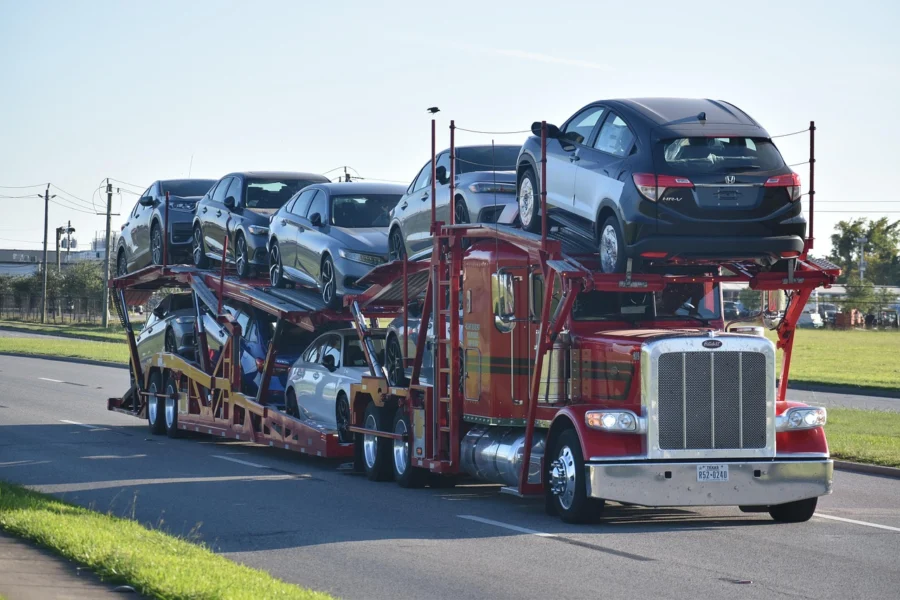
The first big choice is whether your car rides on an open trailer or inside an enclosed trailer. Open shipping is the standard. Your car sits on a multi-level trailer with several other vehicles. It’s exposed to weather and road debris, but it’s also the most affordable option—think 50 to 70 percent cheaper than enclosed.
Enclosed shipping puts your car inside a covered trailer, often with air-ride suspension for a smoother ride. It’s the choice for exotic, luxury, or classic cars. If you’re shipping a standard sedan, open is almost always fine. But if your car is a collector’s piece or you just want extra peace of mind, enclosed is worth the premium.
If you drive a classic car, be sure to read our guide on how to ship a classic car safely across the US — it covers specifics like insurance and seasonal timing. And for a deeper comparison, check out enclosed vs. open transport for classic cars.
Step 2: Research and Book a Licensed Auto Transport Company
Now you know whether you want open or enclosed. Time to find a carrier. Look for a company that is licensed and insured. The Federal Motor Carrier Safety Administration (FMCSA) issues a USDOT number to legitimate carriers. You can look it up to verify their safety record and complaint history.
Get at least three quotes from different companies. Compare not just the price, but also the terms. Some quotes include the fuel surcharge and taxes; others don’t. Ask about the estimated pickup and delivery windows—some are five days, some are ten. Make sure you’re okay with the range.
Also, read online reviews from third-party sites. A company with a hundred happy customers and a few complaints is fine. But one with frequent complaints about delays or damages is a red flag. And never pay the whole thing upfront—any licensed broker will require only a deposit, with the balance paid at delivery.
Questions to Ask Before You Book
When you call a company, have a short list of questions ready. Ask about their broker vs. carrier status—brokers arrange transport, carriers do the actual hauling. Ask if they use subcontractors. Many do, and that’s okay, but you want to know who’s driving your car. Ask about their claims process and how long it typically takes. Finally, ask for a written quote that breaks down all fees. A vague quote is a warning sign.
Step 3: Prepare Your Car for Shipping
Preparation is the part most people skim, but it’s where you can save yourself a lot of trouble later. Here’s your checklist:
- Clean out the car. Remove all personal items, from that water bottle in the cup holder to the golf clubs in the trunk. Carriers aren’t responsible for personal belongings, and you don’t want to tempt theft.
- Disable toll passes and kill switches. Transponders like E-ZPass can trigger tolls as the car rolls through states. And a remote kill switch that disables the ignition could strand the driver on the highway.
- Document the condition. Walk around with your phone and shoot a video of every panel. Close-ups of any existing scratches or dents are vital—if there’s damage on delivery, you’ll need this to prove it wasn’t there before.
- Keep the fuel level low. The car needs enough gas to load and unload, but a full tank adds unnecessary weight. Quarter tank is the sweet spot.
- Check for leaks and mechanical issues. Make sure the car is in drivable condition. Carriers won’t load a car that can’t move under its own power without a special winch fee.
One more tip: take a picture of the odometer. That way you can confirm no one took an unauthorized joyride. Also, if you have a convertible, make sure the roof is in good shape—carriers may not cover it if it’s damaged in transit.
Step 4: Understand the Cost Factors
Costs vary wildly, but cross-country shipping generally falls between a few hundred and a couple thousand dollars. The exact number depends on your route, the distance, and the season. Let’s break down the main factors:
| Factor | How It Affects Price |
|---|---|
| Distance | More miles almost always equal more money. |
| Route | Popular lanes (like New York to Florida) cost less because carriers are always moving there. |
| Season | Snowbird season (October through April) spikes prices on southern routes. |
| Type of transport | Enclosed costs 50-70% more than open. |
| Size and type of vehicle | Large SUVs or vans use more space on the trailer, so they cost more. |
If you’re shipping a vehicle that doesn’t run, expect an extra winching fee. And if your pickup or delivery location is in a busy city or a tricky rural area, some carriers add a surcharge. Ask about those before you book.
A common mistake is booking the cheapest quote without reading the fine print. A lowball quote might not include fuel, insurance, or terminal fees. When you compare quotes, make sure you’re comparing apples to apples. Ask each company for a total price, including all surcharges, and write it down.

Step 5: Pickup Day – What to Expect
The truck shows up—often a two-car transport or a large flatbed. The driver will inspect the car, take photos, and have you sign the Bill of Lading. That document notes the condition of the vehicle at pickup. Make sure everything is accurate. If the driver marks a scratch you didn’t notice, correct it before signing.
Give the driver the keys, but keep a spare. Many drivers will ask you to lock the car and keep the key, or they’ll hold it themselves. Confirm what the driver intends. Also, exchange phone numbers so you can stay in touch during transit.
Most carriers will keep you updated with a rough delivery window. You can ask the driver for a current location once they’re a day out. But keep in mind, that other deliveries might divert them—so flexibility is key.
If you’re shipping a car that’s not being driven by the owner, consider whether you need a ride to the pickup location. Some carriers offer terminal-to-terminal shipping, which is cheaper but requires you to drop off and pick up at their lot. Door-to-door is more convenient but may cost more if the driver has to navigate a tight street.
Step 6: Delivery Day – Inspect Before You Sign
This is the moment of truth. When the car arrives, do a thorough walkaround before signing the final release. Check for any new dents, scratches, chips, or cracked glass. If you find damage, note it on the Bill of Lading and take photos immediately.
Most reputable carriers will file a claim with their insurance for verifiable damage. But without your pickup documentation, those photos you took earlier are your best evidence. The delivery driver will usually wait while you inspect, so don’t feel rushed.
Once you sign the release, the transaction is closed. If you discover damage later, it’s much harder to prove. So be meticulous. And one more thing: make sure the car starts and that the dash lights behave. A simple key turn can save you a walk to the nearest maintenance shop.
What If the Delivery Is Late?
Delays happen. Weather, traffic, and mechanical issues can push a delivery window back. Most carriers will communicate if they’re running late, but if you’re stuck waiting, call the broker or carrier directly. They can usually give you a more precise estimate. If the delay is excessive—say, more than a week past the quoted window—you may be entitled to a refund or discount. That depends on your contract, so read it before you sign.
Step 7: File a Claim (If You Need To)
Sometimes, despite all precautions, damage happens. If you spot something, the process is straightforward: contact the carrier (or broker) within 24 hours and file a written claim. You’ll need photos, the pickup and delivery reports, and a description of the damage.
The carrier’s insurer will review everything and either approve or deny the claim. Patience is your friend here—it can take weeks. Keep all your documents, and follow up regularly. If the carrier seems reluctant, you can file a complaint with the FMCSA.
In the end, most shipments go smoothly. The vast majority of people who ship their cars are doing it for the first time and doing fine. Follow these steps, and you’ll be one of them.
Frequently asked questions
How much does it cost to ship a car cross-country?
Cross-country car shipping typically costs between $800 and $1,500 for open transport, and between $1,200 and $2,500 for enclosed transport. The price depends on distance, route, season, and the size of your vehicle. Always get multiple quotes and ask what’s included, like fuel surcharges and taxes.
How long does cross-country car shipping take?
It typically takes 3 to 10 days for a cross-country shipment. Exact transit time depends on distance and the carrier’s route. Most companies provide an estimated delivery window, but flexibility is important, as delays for other pickups or weather issues can extend the timeline.
Can I ship my car with personal belongings inside?
Most carriers prohibit personal items in the vehicle during shipment. They’re not insured if lost or damaged, and they can shift around and cause damage. If you must ship something, pack it separately. Always check with the carrier, as some allow small items in the trunk, but it’s rare.
Which is better: open or enclosed transport?
Open transport is cheaper and used for most vehicles. Enclosed transport offers more protection from weather and road debris, making it a good choice for luxury, classic, or exotic cars. The trade-off is cost—enclosed can be 50-70% more expensive. For a standard car, open is usually perfectly fine.
Do I need to be present when the truck picks up or delivers my car?
Yes, it’s best to be present during pickup and delivery. You’ll need to sign the Bill of Lading and inspect the car for damages. If you can’t be there, you can authorize someone else to act on your behalf, but make sure they understand the inspection and signing process.

1 comment
1 comment on "How to Ship a Car Cross-Country: Step-by-Step Guide"
Comments are closed.